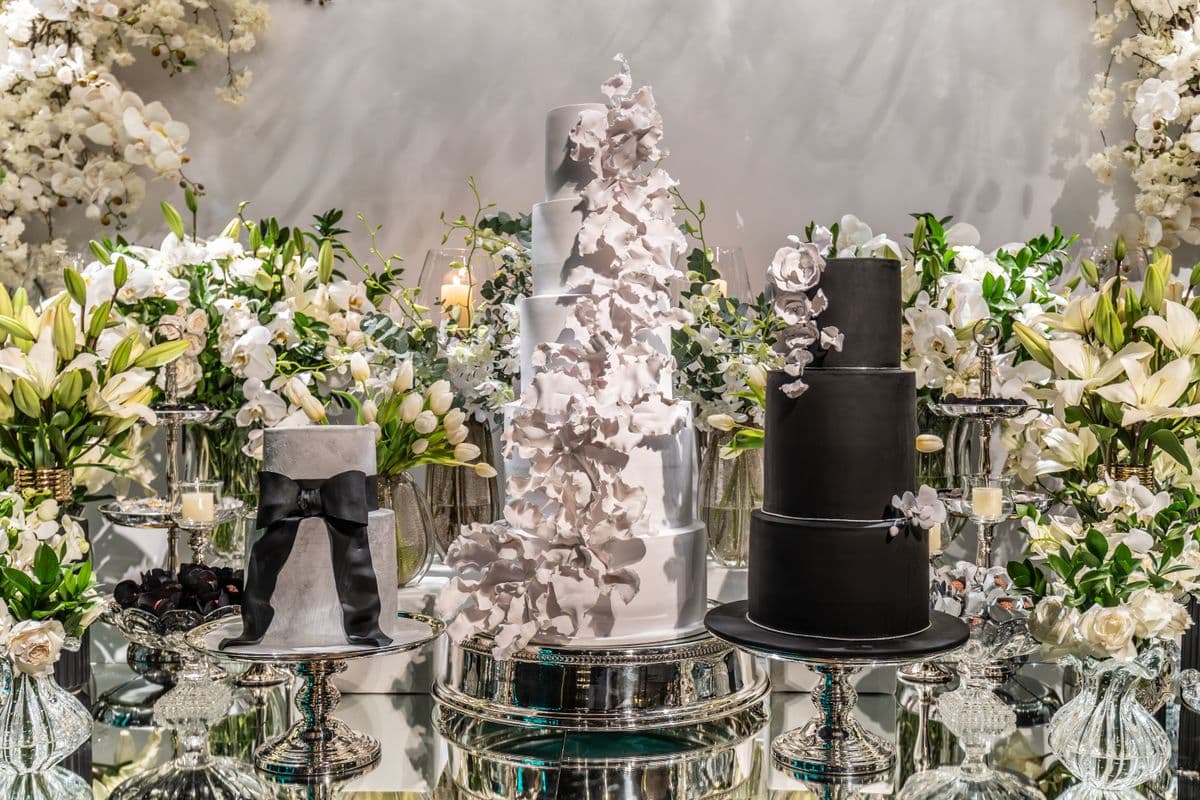

The question surfaces in almost every initial consultation: Is a luxury cake actually worth it, or are we just paying for a name?It's a fair question. The price gap between a custom luxury wedding cake and a traditional bakery option can be significant — and the difference isn't always obvious until you understand what you're actually comparing.
This is not a defense of luxury. It's a framework. Six real decision lenses that help you evaluate the trade-off on your own terms — based on what actually matters to you, your venue, your photographs, and your guests.
First: What We Mean by “Traditional”
When we use the word traditional here, we mean catalog-style bakery cakes — designs selected from a portfolio, with limited or no modification to shape, proportion, flavor combinations, or finishing. Many grocery-store bakeries, regional chain bakeries, and even some specialty cake shops operate this way. You choose from what they offer. What you see is largely what you get.
A luxury or custom cake, by contrast, is built from a blank canvas. The shape, height, tier proportions, flavor pairing, internal structure, finish technique, and every decorative element are designed collaboratively — starting from your aesthetic direction, your venue, your floral palette, and your vision. Nothing comes from a catalog because there is no catalog.
Lens 1: Design Depth and Visual Distinctiveness
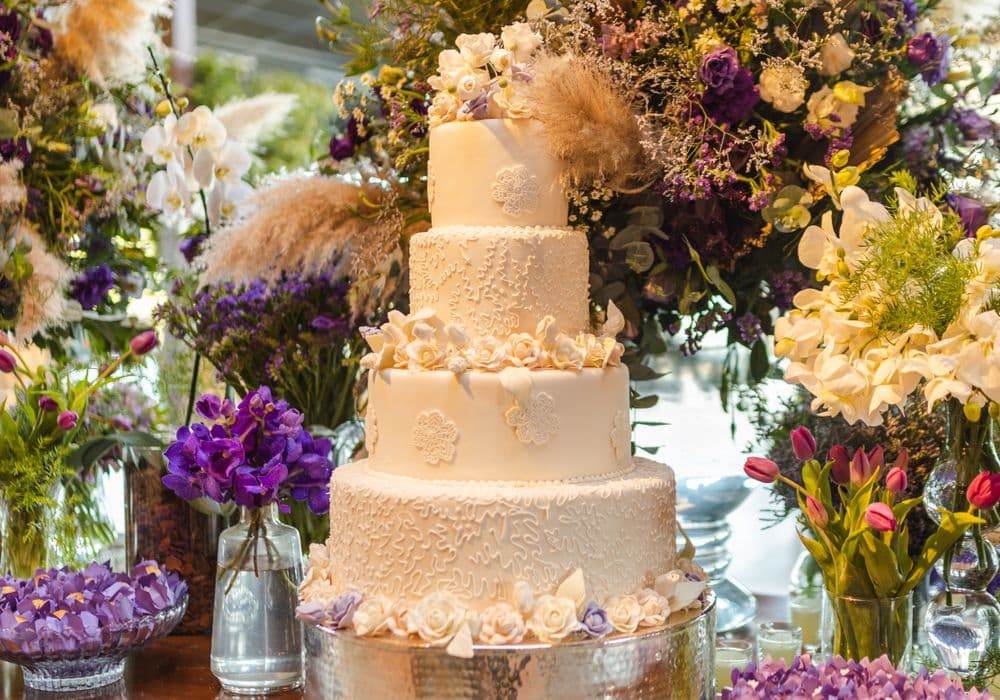
The most visible difference is design. A traditional cake looks like a wedding cake. That is not an insult — it's accurate. The aesthetic is familiar: smooth fondant or basic buttercream, standard tiering, perhaps some piped rosettes or ribbon trim. There is a reason these designs persist: they are broadly acceptable and visually neutral.
A luxury cake, designed from the ground up, can do something a catalog cake structurally cannot: it can be an object that belongs specifically to this wedding, this venue, and this couple. The proportions can reflect the architecture of the space. The finish can pull from the bridal gown. The florals can echo the ceremony arrangements at a different scale. Design coherence — the feeling that everything was considered together — is achievable only when the cake is part of the design conversation from the beginning.
Who this lens matters most for: Couples with a strong aesthetic vision, design-forward weddings, or events at visually distinctive venues like Pelican Hill, Montage Laguna Beach, or estate properties. If your florist is exceptional and your photographer shoots in a particular editorial style, a generic catalog cake is a weak link that your vendors will notice.
Lens 2: Ingredient Quality and Flavor Complexity
Most couples are surprised to learn how much ingredient sourcing varies between tiers of cake makers. Commercial bakeries that produce hundreds of wedding cakes per week necessarily prioritize consistency and scale. That means shelf-stable ingredients, pre-made fillings, and standardized flavor combinations that hold up in production environments.
A custom luxury cake studio controls its own ingredient sourcing. This means real butter, fresh-made curds and preserves, seasonal fruit fillings, high-percentage chocolates, and flavor combinations designed as pairings rather than options. The difference is not just philosophical — it is something guests can taste and remember.
Who this lens matters most for: Couples who care about food quality broadly — who chose their caterer for the menu, not just the service, and who want the cake to be part of the culinary experience of the reception. If you would not serve a frozen entrée at your wedding dinner, the same logic applies here.
Lens 3: The Photography Question
Wedding photography is a permanent record of the event. The cake appears in detail shots, wide-angle receptions shots, the cutting ceremony, and often in the couples' portrait session if the setup allows. A traditional cake in a beautifully designed reception reads as an afterthought. A custom cake that was designed in the same aesthetic language as the rest of the event reads as intentional.
This is not a hypothetical consideration. Ask any wedding photographer about the shots they use in their portfolio and they will tell you: the cake matters. The texture of the finish, the way it catches available light, the proportional relationship between the cake and the couple — these are photographic factors, not just dessert factors.
Who this lens matters most for: Couples investing in premium photography or who plan to share their wedding images publicly. If you are paying $4,000–$8,000 for a photographer, the cake is not where to cut corners — it is a set piece.
Lens 4: Guest Experience and Memory
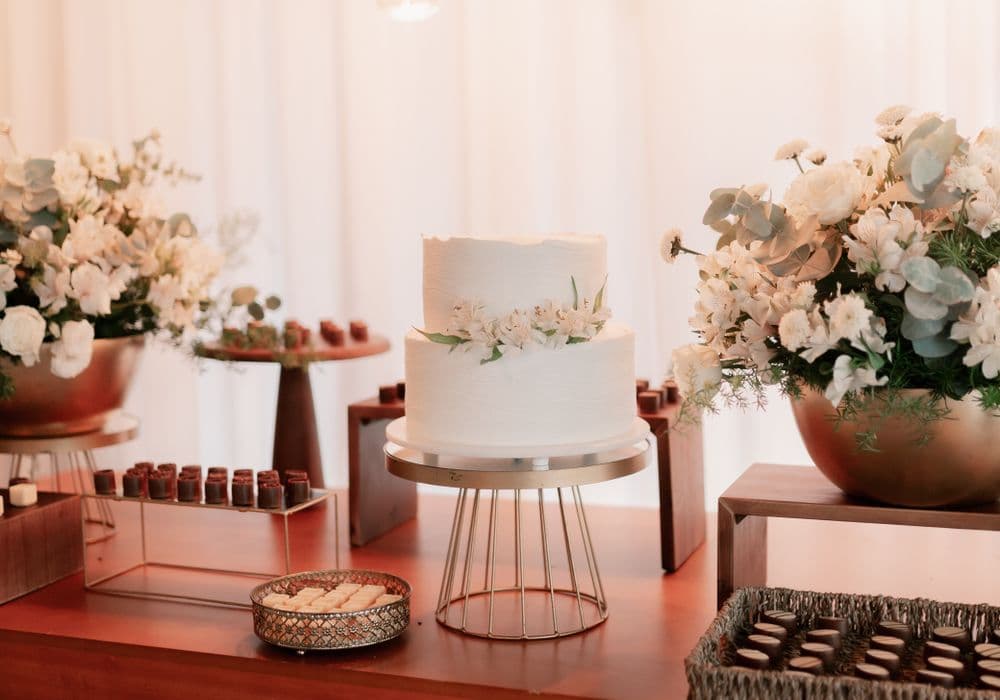
The cutting ceremony is a public moment. Guests watch, they comment, they taste. The conversation at the dessert table — "this is remarkable," or polite silence — is a real data point about the experience you created. A cake that tastes exceptional and looks extraordinary gives guests something specific to talk about and remember.
From a hospitality perspective, the cake is one of the few elements of a wedding reception where every single guest has direct sensory contact. They see it from a distance, they watch it be cut, and they eat it. That is a remarkable engagement surface for a single element. Using it well matters.
Who this lens matters most for: Couples hosting food-literate, design-aware guests — industry professionals, culinary enthusiasts, people who have attended many high-end weddings. In these audiences, a generic cake is noticed in its absence of distinction.
Lens 5: Venue Appropriateness and Design Coherence
Venue is a powerful design frame. A grand ballroom at Pelican Hill or the Langham Pasadena sets a visual standard that a catalog-tier cake will not meet. The visual weight of the space demands a cake with presence — height, proportion, finish quality, and design authority that can hold its own in that setting.
Conversely, an intimate outdoor wedding at a private vineyard in Temecula or a boutique venue in Laguna Beach may call for a different visual register entirely — restrained, organic, architectural minimalism. A custom cake designer can calibrate to that. A catalog cake cannot.
Who this lens matters most for: Everyone with a high-investment venue or a strong venue aesthetic. If your venue has a visual identity, your cake should be part of that story, not a footnote.
Lens 6: The Experience of Buying
The process of commissioning a wedding cake is itself part of the wedding experience for many couples. A luxury custom consultation — discussing your vision, exploring design references, tasting curated flavor combinations at home through a tasting box, receiving design sketches, and refining until it is exactly right — is qualitatively different from selecting a catalog entry and choosing a flavor drop-down.
For many couples, this experience matters. It is part of the memory of planning a wedding. It is an occasion for a couple to make a collaborative creative decision. The transactional efficiency of a catalog cake is a feature for some and a loss for others.
Who this lens matters most for: Couples who are investing in the process of planning as much as the product. If you care about finding vendors who genuinely understand your vision, the consultation experience is an early signal of how the relationship will feel throughout.
The Honest Summary
A traditional bakery cake is entirely appropriate for couples who do not have strong opinions about the cake, are working within a tight budget, or genuinely prefer the simplicity of a catalog process. There is no judgment here. Not every wedding needs a custom cake.
But if you are investing in design, photography, and guest experience — if the other elements of your wedding are custom and considered — a generic cake is the one element that will look out of place. The luxury cake pays for itself in design coherence, photography quality, and a guest experience that lands.
Frequently Asked Questions
What is the difference between a luxury wedding cake and a traditional one?
A luxury wedding cake is custom-designed from the beginning — proportions, flavors, finishes, and decorative elements are all built around your specific vision and venue. A traditional bakery cake uses preset designs with limited customization, often drawn from a catalog. The difference shows up in design depth, ingredient sourcing, the consultation process, and ultimately in the cake's visual impact at your wedding.
Is a luxury wedding cake worth the higher cost?
For couples who care about design, photography, and guest experience, yes — the ROI is real. The cake is one of the most-photographed elements of a reception and one of the most-discussed sensory memories guests carry home. A custom luxury cake can also serve as a design anchor for the entire reception, with florals, linens, and tableware drawing from its palette and proportion.
What should I ask when comparing luxury and traditional cake options?
Ask about the consultation process, ingredient sourcing, design customization limits, tasting options, delivery setup, and what happens if there is a problem on the day. A luxury baker will have detailed answers for all of these. A traditional bakery will likely have policy-driven responses that apply to every order, not yours specifically.
Explore Further

Written by
Marcus Rivera
Pastry Design Specialist· Monarch & Grain Co.
Pastry design specialist focused on the intersection of craft, flavor, and visual design in luxury celebration cakes. Marcus writes with a designer's eye and a baker's precision — covering everything from sugar work techniques to the structural engineering of multi-tier showpieces. His work draws on years in both pastry kitchens and luxury event environments across Southern California.
